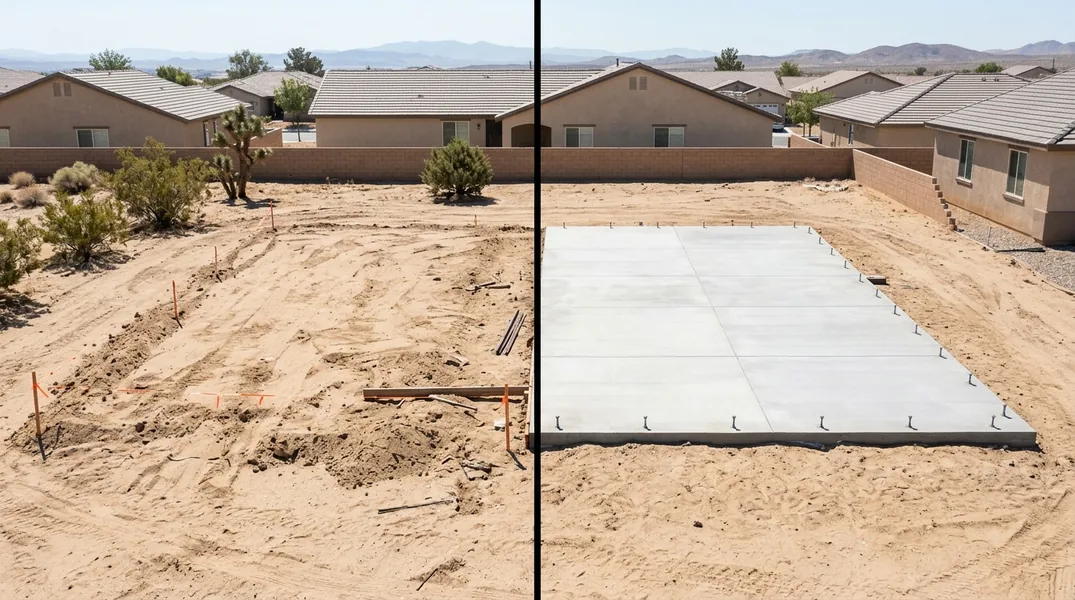
Understanding New Construction Concrete Slabs in Victor Valley
Purchasing a new home in Victorville is an exciting milestone, but it comes with serious responsibility. One of the most critical structural elements you'll inherit is the foundation slab, yet many homebuyers overlook it during the inspection process. A concrete slab serves as the base for your entire home, supporting walls, flooring, and everything inside. Unlike a traditional basement foundation, a slab sits directly on the ground, making it vulnerable to soil movement, moisture infiltration, and settling issues that can cost tens of thousands of dollars to repair after closing.
The Victor Valley region experiences temperature fluctuations and occasional seismic activity that can stress concrete foundations. New construction slabs in Victorville must be engineered and poured to withstand these conditions, but not all builders follow best practices. Before you sign closing documents, you need to understand what a properly constructed slab looks like, what questions to ask your builder, and what warning signs demand a second opinion from a structural engineer. This guide walks you through the essential checks every homebuyer should perform.
What to Inspect on Your New Construction Slab
A thorough slab inspection requires you to look beyond surface appearance. Start by examining the perimeter where the slab meets the foundation stem wall. You should see a clear, level transition with no visible cracks wider than a hairline. Small cracks are normal as concrete cures, but cracks wider than one-eighth of an inch, especially those running diagonally or in patterns, indicate potential problems with soil preparation, concrete mix, or settling. Walk the entire perimeter and interior of your home's slab, noting any areas where the concrete appears discolored, sunken, or raised.
Check for signs of moisture damage, including efflorescence (white, chalky deposits on the concrete surface), water stains, or damp spots. These indicate that water is moving through or beneath the slab, which can lead to mold, foundation instability, and structural damage over time. Look at the garage slab separately, as it often experiences different stress patterns and moisture exposure than interior slabs. Inspect where utility penetrations (plumbing, electrical, HVAC) pass through the concrete. These openings should be properly sealed and shouldn't show signs of cracking or separation around the edges. Finally, test the floor with a long level or straightedge to identify any slopes or high spots that shouldn't be there. A properly constructed slab should be relatively flat with minimal variation.
Critical Questions to Ask Your Builder About Foundation Construction
Before closing, sit down with your builder's representative and ask specific questions about slab construction. Request documentation showing soil testing and site preparation reports. Builders should have tested the soil's bearing capacity and compacted the subgrade properly before pouring concrete. Ask whether they used a vapor barrier beneath the slab, which is essential in the Victor Valley climate to prevent moisture from wicking up through the concrete. Request the concrete mix design specifications, including the water-to-cement ratio and air entrainment details. A proper mix for your region should include air entrainment to resist freeze-thaw cycles and include reinforcement specifications such as rebar placement or wire mesh.
Ask for the as-built inspection reports and any third-party testing performed during the pour. Most reputable builders hire independent inspectors to verify concrete strength through cylinder breaks or core samples. Request the date the concrete was poured and information about the curing process. Concrete needs proper moisture and temperature control during its first 28 days to develop full strength. Ask whether the builder obtained a Certificate of Occupancy or similar documentation confirming that all inspections passed. Finally, inquire about the builder's warranty on the slab and what defects are covered. Understanding these details before closing gives you leverage if problems emerge later and provides documentation for insurance purposes.
Common Red Flags and When to Call a Structural Engineer
Certain warning signs should trigger an immediate call to a structural engineer before you close on your new home. Large cracks (wider than one-quarter inch), cracks that continue across multiple rooms, or cracks that appear in stair-step patterns through block foundations indicate serious settling or structural movement. Significant slopes or dips in the slab surface, especially near doors or in living areas, suggest improper grading, inadequate compaction, or differential settling. If you notice water pooling on the slab during or immediately after rain, the site drainage is inadequate and moisture problems will likely develop. Efflorescence covering large areas of the slab indicates chronic moisture issues that demand investigation.
Cracks around window wells, door frames, or where the slab meets exterior walls are particularly concerning because they often signal foundation movement or water infiltration. If the builder dismisses your concerns or refuses to provide documentation of slab testing and inspection, that's a red flag in itself. A structural engineer's inspection typically costs between 400 and 800 dollars but can save you from inheriting a property with hidden foundation damage. Many homebuyers include a structural engineer's inspection as a contingency in their purchase agreement, which is a smart investment for peace of mind.
How Concrete Slab Issues Affect Your Home's Future Value and Maintenance
Foundation problems don't stay isolated to the slab itself. Poor slab construction can lead to cracking in drywall, doors and windows that stick or won't close properly, and uneven flooring throughout your home. Moisture infiltration through a compromised slab creates an environment for mold growth, which poses health risks and can require expensive remediation. If you ever need to install Concrete Driveways, add Concrete Patios, or perform Concrete Repair & Resurfacing work on your property, foundation issues can complicate those projects and increase costs significantly.
From a resale perspective, foundation problems are a major concern for future buyers and lenders. When you eventually sell, a home inspector will identify slab issues, and potential buyers will demand credits or price reductions. Some foundation problems are so severe that they can make a property difficult or impossible to sell without major remediation. Addressing slab issues during the new construction phase, before closing, is far less expensive and complicated than dealing with them years later. Taking time to inspect and document the condition of your slab protects your investment and ensures that your new home remains structurally sound for decades to come.
Next Steps: Getting Professional Guidance Before Closing
Don't rely solely on the builder's inspection or a general home inspector who may lack specialized foundation knowledge. If you have any concerns about your new construction slab in Victorville, hire a structural engineer or foundation specialist to evaluate the property before you close. This is one of the most important inspections you can perform as a homebuyer. The cost is minimal compared to the potential expense of repairing a defective slab after purchase. If issues are discovered, you have negotiating power with the builder to make repairs or credits before closing.
If you're already in your new home and have questions about your concrete slab or need advice on future concrete work, the team at Victorville Concrete can help. Whether you're planning Stamped & Decorative Concrete projects or need to understand your foundation better, contact us at (760) 493-2423 or request a free estimate today. We serve homeowners throughout the Victor Valley and understand the unique challenges that our local climate and soil conditions present. Taking action now to understand your slab's condition ensures that your new home investment remains protected for years to come.
Looking for a professional concrete contractor in Victorville? Victorville Concrete responds fast for all your concrete needs.
Get a Free QuoteOur services: Concrete Driveways · Concrete Patios · Stamped & Decorative Concrete